
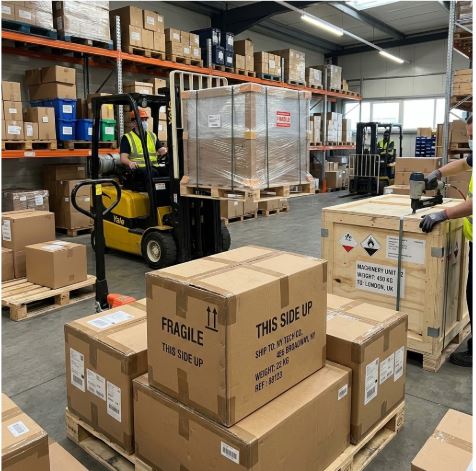


Imagine walking into a high-volume warehouse or distribution hub during the morning rush. The atmosphere is filled with the hum of forklifts, the beep of scanning guns, and the steady movement of trucks backing into loading bays. In this environment, it is easy to see why managers spend their time focusing on high-ticket assets like inventory management systems, transport routes, and fleet scheduling. But there is a silent, workhorse component of the supply chain that rarely gets any credit until it fails completely: transport packaging. The humble wooden pallet and the industrial wrapping that keeps a load secure are the literal foundation of physical logistics, yet they are too often treated as a transactional afterthought.
When you look at the journey a product takes from the manufacturing floor to the end customer, it is essentially a series of physical challenges. Every sharp turn, sudden brake, and rough stretch of road tests the structural integrity of your cargo. If you are operating a busy logistics network or managing a manufacturing facility in New South Wales, partnering with reliable, consultative pallet suppliers sydney early on can save your business from costly, self-inflicted product damage claims. Working with a supplier who understands localized freight pressures means you are not just purchasing basic wooden platforms; you are investing in structural insurance for your cargo before it even leaves your loading dock.
The real trouble begins when businesses treat transport packaging as a simple commodity where the only metric that matters is the absolute lowest unit price. It is an understandable pressure when margins are tight, but it is a short-sighted strategy. A slightly cheaper, poorly constructed pallet or thin, low-grade stretch wrap might save a few cents on paper, but if a load shifts on a highway and collapses inside a trailer, those minor savings are instantly wiped out. Suddenly, you are dealing with rejected deliveries, cleaning up damaged stock, putting receiving staff at risk when they open trailer doors, and managing the long-term fallout of disappointed clients who did not receive their orders on time.
There is also a direct physical relationship between your transport packaging and your warehouse infrastructure. Modern pallet racking is engineered to highly specific load-bearing tolerances. If a pallet has thin structural lead boards, cracked timber stringers, or non-standard dimensions, it can easily sag, warp, or split when placed under weight. This introduces quiet but severe safety hazards into your high-rise storage bays. A compromised pallet sitting fifteen metres in the air is a disaster waiting to happen, particularly in fast-paced distribution hubs where forklifts are constantly loading and unloading heavy stock in tight spaces.
Furthermore, the consistency of your packaging directly impacts your daily picking and packing speeds. When pallets are uniform, sturdy, and easy to handle, machinery operators can work with absolute confidence and pace. They do not have to slow down to inspect every unit for splintered timber, protruding nails, or irregular footprints that could jam a automated conveyor system or puncture a tyre. Standardisation allows you to streamline your workflows, reduce physical labor fatigue, and keep your daily shipping schedules predictable and steady.
We also have to consider the environmental factors that timber packaging faces during transit. Throughout Australia, transport containers and open flatbeds are routinely exposed to extreme shifts in temperature and humidity. Wet, uncured timber can trap moisture under protective plastic wrap, leading to mould growth that can quickly ruin sensitive cardboard retail packaging or compromise hygienic, food-grade stock. Quality packaging suppliers take the time to properly cure and treat their timber, ensuring it remains structurally sound, dry, and clean throughout the entire journey.
Ultimately, changing how you approach your transport packaging is about shifting your business mindset from a reactive scramble into a proactive, preventative operation. It is about realising that the cheapest materials are completely worthless if they cannot protect your products when the pressure is on. A bit of foresight and a focus on quality ensures your stock arrives in perfect condition, reduces your daily operational stress, and allows you to build a reputation for reliability that keeps your customers coming back.