
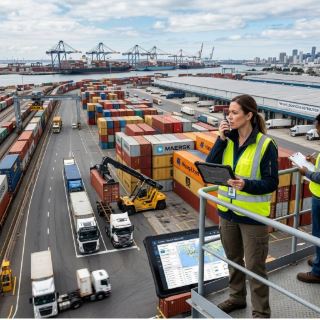


Operational efficiency is one of those terms that gets used constantly in logistics discussions, yet the actions needed to actually achieve it are often less clearly defined. Businesses invest in warehouse technology, workforce training, and customer service improvements, but overlook one of the most significant leverage points available to them: how freight is planned before a single vehicle leaves the loading dock.
Freight planning is not simply a matter of booking carriers and hoping for the best. Done properly, it is a strategic discipline that reduces costs, protects delivery performance, and gives operations teams the visibility they need to make better decisions every day.
Reactive Planning is Expensive
Most operational inefficiencies in freight do not emerge suddenly. They accumulate gradually from a reactive approach to transport. Shipments get booked at the last minute because no one had time to plan ahead. The cheapest available carrier is not always the most suitable one for a given route or consignment type. Routes are chosen out of habit rather than analysis.
The consequences are predictable: missed delivery windows, unexpected surcharges, and drivers covering unnecessary distances. Each of these costs is avoidable with a more deliberate planning process.
When freight decisions are made in advance with access to the right data, businesses gain the ability to consolidate loads, negotiate better rates with carriers, and avoid the premium costs that come with urgency.
Carrier Selection as a Strategic Decision
Choosing which carrier to use for which lane is one of the most impactful freight planning decisions a business makes. Yet many companies default to using the same provider for everything, regardless of whether they are the best fit for a particular shipment type or destination.
A well-structured freight planning process involves matching shipment characteristics to carrier capabilities. A carrier that excels at metropolitan next-day delivery may not be the right choice for a regional full truckload run. Palletised freight has different handling requirements to cartons and satchels. Air freight and intermodal options each have their place in a well-managed transport mix.
This kind of carrier optimisation requires data: lane-level performance metrics, cost-per-consignment analysis, and on-time delivery tracking by route. Without it, carrier selection becomes guesswork.
Visibility Drives Better Decisions
One of the most consistent themes in modern logistics is the relationship between data visibility and operational performance. Businesses that have real-time insight into where their freight is, whether it is on schedule, and what exceptions are occurring can respond quickly and communicate accurately with customers and internal stakeholders.
This level of visibility is not possible in a fragmented or paper-based planning environment. It requires integrated systems that bring carrier data, consignment status, and delivery confirmation into a single view. When operations teams have that view, they shift from firefighting to proactive management.
Structured Freight Management services provide exactly this kind of integrated oversight, combining planning, execution, and reporting into a cohesive system rather than a series of disconnected steps.
Cost Control Through Planning
Freight costs are rarely fixed. They fluctuate with fuel prices, carrier capacity, seasonality, and the specific characteristics of each shipment. Businesses that plan proactively are in a much stronger position to control those costs.
Consolidating smaller shipments into fewer, fuller loads reduces cost per unit. Locking in rates through carrier agreements rather than booking on the spot market reduces exposure to price volatility. Understanding which lanes are high-cost and why opens the door to route redesign or carrier negotiation.
Without a planning function dedicated to this analysis, freight costs tend to drift upward over time as inefficiencies compound.
Scalability Requires a Solid Foundation
For businesses experiencing growth, freight planning becomes even more critical. A transport model that barely functions at current volumes will not cope with increased demand. The pressure points that already exist will simply amplify.
Businesses that take the time to build robust freight planning processes before they need them are far better positioned to scale without disruption. They have the carrier relationships, the data infrastructure, and the operational discipline to absorb volume increases without losing service quality.
Efficiency in freight is not an end state to reach once and maintain. It is an ongoing discipline, and it begins with the decision to plan properly.